Diagnosis
by observation (Bo-shin)
Bo-shin
involves looking at the tongue and sometimes also the fingers, toes, ears, and
face. The Japanese medicine practitioner examines the tongue to assess its color shape, and coating for information about the functioning of your
internal organs.
Micro-diagnosis,
which involves the examination of an individual body part for information about
the whole body, is also a speciality in Japanese medicine. Just as different
parts of the tongue are said to correspond to various parts of the body, so too
it is said to be possible to examine the hands, fingers, toes, face, ears, and
so on for similar clues.
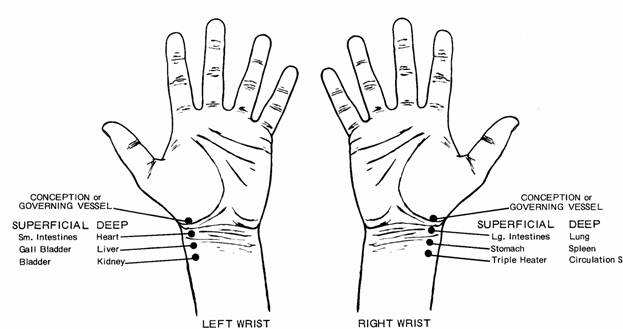
For
example, in analyzing the fingers and toes, redness, red spots, and the sensation
of heat in a particular digit indicate a jitsu
(excess) condition in the organ to which it corresponds, while pallor,
white or brown spots, or sensations of coldness can indicate kyo (deficiency).The practitioner may
also take note of your gait, body size and proportions, skin, nails, hair,
facial expressions, and even the color of clothes that you’re wearing as all
can provide valuable clues to your current state of health.


